Named responsibility
Lance Jerrard remains accountable for the brand, the intellectual property and the standard of the work.

The Careful Optimist is not an anonymous website. This page explains the people, the legal structure and the method behind the work before anyone is asked to place trust in it.
The people and responsibilities behind this work are named on this page because responsibility should be inspectable, not implied.
Lance Jerrard remains accountable for the brand, the intellectual property and the standard of the work.
The entities have different purposes. This page explains what each one is and why it matters.
The public philosophy. It teaches people how to stay hopeful without becoming careless or naïve.
The private decision membership. It helps members examine important decisions before money, time or trust moves.
The operating structure and practical decision system behind the tools, frameworks and member work.
The method used to look beneath the visible story, test assumptions, examine risk and separate evidence from interpretation.
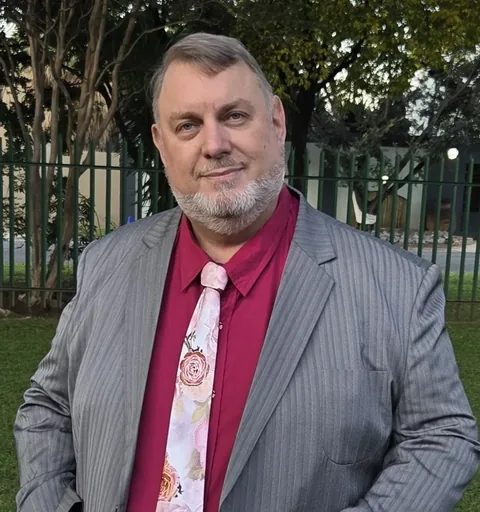
Lance Jerrard is the founder and chief executive behind The Careful Optimist, The Careful Circle and the Premise Decision Engine.
He has spent approximately thirty-five years building businesses, testing commercial ideas and making decisions in situations where money, time, trust and reputation were genuinely at stake. He established the founder-led business structure in 2002, beginning with decision education and structured commercial reasoning in South Africa.
Over time, that work developed into the Premise Decision Engine: a repeatable discipline for identifying the real decision, separating evidence from assertion, exposing hidden dependencies and finding the first responsible move before more activity compounds the wrong things.
Some principles were learned through decisions that worked. Others came from experiences that were public, difficult and expensive. Those lessons now shape the standard of the Circle: no artificial urgency, no promise of certainty and no attempt to take responsibility for the final decision away from the person who must live with it.
Lance carries personal responsibility for the brand, the e-book, the intellectual property, the membership standard and the language used to explain the work. He remains the founder, chief executive officer and majority shareholder within the stated operating structure.
The entities below have different roles. They should not be treated as though they are the same organisation.
Lance Jerrard is the founder and has served as chief executive officer since 2002.
This does not mean that every entity performs the same role. It means the founder, ownership and intellectual-property position are stated openly.
You are not responding to a faceless opportunity. Each person below carries a defined responsibility within the wider work. Their roles are shown separately from the legal entity structure so experience, ownership and control are not confused.
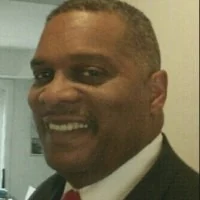
Earl brings command-level discipline and systems architecture to the reasoning structure behind the Premise Decision Engine.
He led the multi-year strategic and engineering build behind the method, helping convert a large body of commercial experience, decision logic and practical judgement into a repeatable system that can be used when pressure is live and the visible problem is not necessarily the real one.
His background spans artificial-intelligence engineering, legal-precedent modelling, strategic finance, aerospace procurement strategy, governance and complex systems design. His contribution is the architecture beneath the experience: a disciplined structure that keeps the real decision visible, distinguishes symptoms from causes and exposes hidden dependencies.
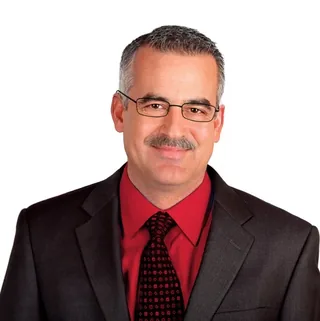
Richard has carried the finance and control responsibility within the founder-led structure since 2002.
His role is to ensure that commercial decisions can survive contact with cash flow, cost, timing, accountability and execution. He examines whether figures are complete, whether assumptions are visible and whether a proposed decision remains viable after delivery costs, delays, collections and downside are taken into account.
His focus includes runway protection, viable pricing and terms, collections, stop-work rules, cost control, clear financial ownership and figures that can be reviewed and defended under pressure.

Morne leads positioning and communication clarity across the wider Premise work. He has been part of the founder-led structure since 2002 and works at the point where strategy, structure and communication meet.
His role is to preserve the narrative spine of a decision so the real question remains visible, the logic can be followed and the next move is not lost beneath jargon, performance or unnecessary volume.
He helps translate detailed commercial reasoning into language that owners, members and decision-makers can understand and use, while maintaining consistent terminology across pages, tools and member communications.
You should understand what something is, what it costs, what it requires and what it cannot promise before you decide.
Where a claim matters, the evidence should be open to inspection. Confidence alone is not proof.
The tools and guidance can help you examine a decision. They do not take ownership of the final decision away from you.
We do not promise certainty. We do not make decisions on behalf of members. We do not treat a confident answer as a qualified answer.
The work is designed to help people slow down long enough to examine the evidence, understand the risk, see the structure and decide what the next sensible step should be.
Choose the next page according to what you need to understand, not simply because another link is available.
Proof Under Pressure shows the dated public record, the structural question, the evidence boundary and the deeper evidence route.
Inspect Proof Under PressureReview what The Careful Circle is, what it includes and whether it fits the kind of decision you are facing.
Return to The Careful Circle